
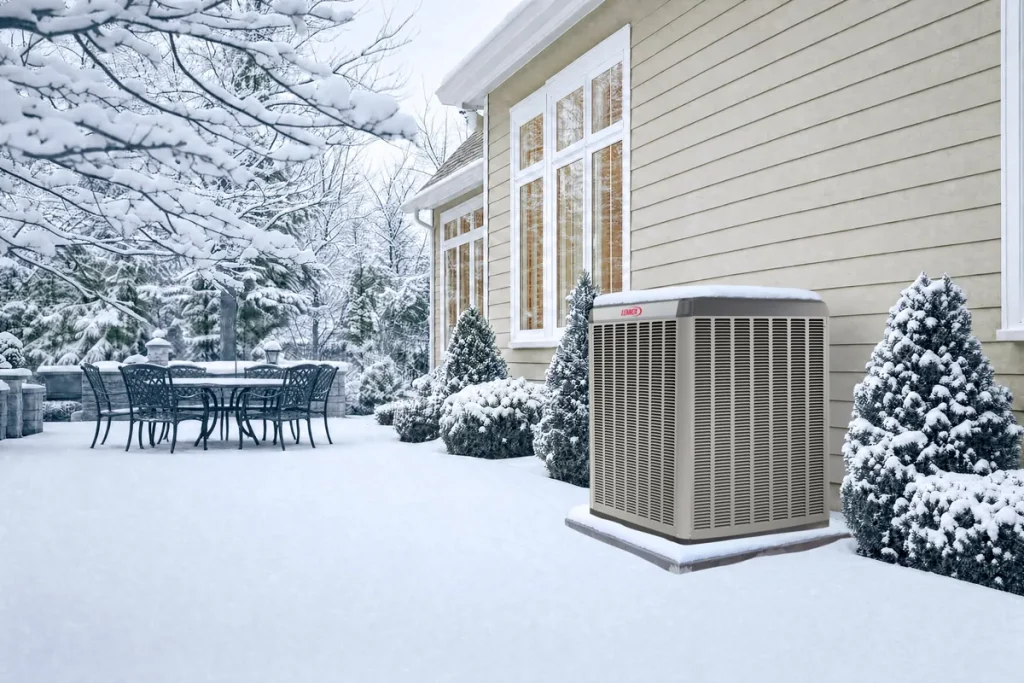
Yes, heat pumps in winter can heat a Canadian home well when you choose a cold climate model and have it sized properly. Natural Resources Canada says cold climate air source heat pumps can keep heating well below freezing, down to -30°C. In the harshest cold, many systems add backup heat to keep up.
Pulling heat out of freezing air sounds like it shouldn’t work, and that’s why so many people hesitate. The surprising part is that there is still heat in cold air, and modern heat pumps are built to collect it.
Here’s how it works, what changes as the temperature falls, and what to expect through the winter.
How Does a Heat Pump Heat a Home?
A heat pump uses electricity to move heat instead of creating it. It pulls heat from the outside air, raises the temperature of that heat, and moves it indoors.
Even on a cold winter day, the outdoor air still holds heat energy. The heat pump collects it, which is why it can deliver more heat than the electricity it uses. That’s how heat pumps in winter keep a home warm even when the air outside feels bitterly cold. In summer the process reverses and the system cools your home like an air conditioner.
Do Heat Pumps Work in Freezing Winter Temperatures?
Yes, if it’s a cold climate model. These units can keep working in temperatures well below freezing, down to -30°C.
What changes as it gets colder is how much heat the unit can put out. The colder the air, the harder the system works to collect heat, and its output eases off. That’s normal, and it’s the reason sizing and backup heat are so important.
What it means for you: Ask us how the system you’re considering performs at the coldest temperatures your home sees, not just on a mild winter day.
What Is a Cold Climate Heat Pump?
A cold climate heat pump is designed to keep heating at low outdoor temperatures where a standard model starts to fall off. It’s the type most homeowners in colder regions should be looking at.
Natural Resources Canada says cold climate air source heat pumps can heat up to 3.5 times more efficiently than a gas furnace. Actual results depend on your home and location.
Not every model sold is built for deep cold, so before you commit, contact us and we’ll confirm that the heat pump you’re quoted is a cold climate unit and how it performs at low temperatures.
What Is Backup Heat and When Does It Run?
Backup heat is a second heat source that helps when the heat pump can’t keep up on its own. It might be electric heating elements, or in a hybrid system, your gas furnace. Many homeowners run heat pumps in winter with some form of backup, and that’s a normal setup, not a sign of a problem.
It usually kicks in only on the coldest days. In case studies from Natural Resources Canada, small backup heaters were expected to run for a small share of the heating season, and one home’s backup used just 2% of the heat pump’s energy, much less than expected.
Oversizing backup heat is a common mistake, since a large unit adds cost and can mean a bigger electrical upgrade. The right amount depends on your home’s heat loss.
Why Is There Frost or Steam on My Heat Pump in Winter?
In cold, damp weather, frost can build up on the outdoor coil. To clear it, the heat pump runs a defrost cycle every so often. During a defrost you may see steam or vapour rising from the unit, and the system may briefly blow cooler air indoors.
That’s normal. What isn’t normal is ice that builds up and stays, or a unit that stops heating and doesn’t recover. Keep snow, ice and debris cleared away from the outdoor unit so air can flow freely, and call a technician if heavy ice keeps coming back.
How Can I Get the Best Performance From Heat Pumps in Winter?
A few habits make a noticeable difference:
- Keep the thermostat steady. Frequent big temperature swings can push the system into backup heat.
- Seal and insulate first. Air sealing lowers your heating load, which helps any heat pump keep up.
- Make sure it’s sized correctly. A proper heat loss calculation, not a rule of thumb, sets the right size.
- Keep the outdoor unit clear of snow, ice and debris.
- Replace the filter and book regular service. Our HVAC maintenance guide explains what a good visit covers.
If some rooms stay chilly no matter what system you have, our post on cold rooms covers the usual causes.
Is a Heat Pump the Right Choice for My Home?
That depends on your home’s heat loss, your ducts, your electrical service and what you pay for energy. Our heat pump vs furnace comparison walks through how to weigh a heat pump against a furnace or a hybrid system.
If you’re leaning toward a switch, a home assessment gives you actual numbers instead of general rules.
When Should I Call a Technician About My Heat Pump?
Call us if you notice any of these with your heat pump in winter:
- The system isn’t heating, or the home is cooler than the thermostat setting for hours.
- Ice builds up on the outdoor unit and doesn’t clear.
- Loud banging, grinding or squealing from the indoor or outdoor unit.
- Backup heat seems to run all the time.
- Your heating bills jump with no change in weather or habits.
Quick Answers
At what temperature does a heat pump stop working?
It depends on the model. Cold climate air source heat pumps can work down to -30°C. Standard models lose output at higher temperatures than that.
Do I need backup heat with a heat pump?
Often, yes, for the coldest days. It might be electric heating elements or a gas furnace in a hybrid system. Our team can tell you how much your home needs.
Is it normal for a heat pump to blow cool air in winter?
Briefly, yes. During a defrost cycle the system may blow cooler air for a short time. If it keeps blowing cool air and the house gets cold, call for service.
Why is my heat pump running all the time in winter?
On very cold days a heat pump runs longer to keep up, which is normal. If it runs constantly and the house still isn’t warm, it may be undersized, short of airflow or in need of service.
Should I turn my thermostat down at night with a heat pump?
Small changes are fine. Large swings can push the system into backup heat, so steady settings usually work best.
Curious How a Heat Pump Would Handle Your Winters?
Our team installs and services heat pumps and can talk through how one would perform in your home. We’ll give you straight answers, including when a different setup would be a better fit.
Contact Atlantis HVAC Systems Inc. or call us at 905-845-4009.
Sources: Natural Resources Canada, Heat pump basics; Natural Resources Canada, Best practices in heat pumps; Natural Resources Canada, Cold climate air source heat pumps: assessing cost effectiveness, energy savings and greenhouse gas emissions reductions in Canadian homes.