
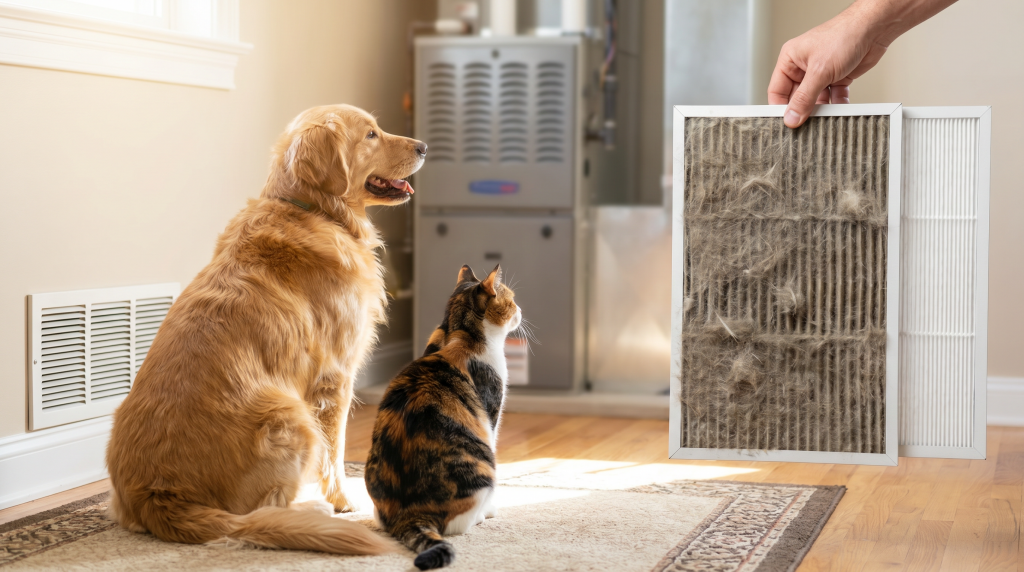
A pet-friendly home means your HVAC system works harder. Pet hair and dander clog filters 2-3x faster, reducing airflow and straining equipment. The fix: check filters monthly (replace every 1-2 months), run the fan more to dilute odours, keep humidity at 30-50%, vacuum vents/registers regularly, and don’t close vents in unused rooms. Pet households need a more proactive maintenance routine than pet-free homes, plus a monthly 5-minute check and professional service every 6-12 months.
Pets bring a lot into a home. They also bring fur, dander, tracked-in dirt, and odours that challenge your HVAC system in ways most homeowners don’t anticipate. If you find yourself dusting constantly, noticing that “dog smell” never fully disappears, or replacing filters more often than your neighbours, your furnace and air conditioning system are working harder than they should. A few practical adjustments to your filter routine, cleaning habits, and HVAC maintenance can make your home more comfortable for people and pets alike.
Why Pets Are Hard on HVAC Systems
Every time your HVAC system runs, it pulls air through return vents and across the filter. In a pet household, that air carries significantly more hair, dander, skin cells, and tracked-in outdoor debris. Homes with pets experience 2-3 times faster filter clogging compared to pet-free homes.
This extra load affects your system in three measurable ways:
Reduced Airflow
Pet hair and dander create a thick mat on filters far faster than normal household dust. When airflow drops, your furnace or air handler works harder to push air through, increasing energy costs and wear on the blower motor.
Uneven Temperatures
Restricted airflow means some rooms don’t receive enough heated or cooled air. You might notice your bedroom stays warmer in summer or colder in winter than the rest of the house.
More Frequent Breakdowns
Overworked components fail sooner. A clogged filter forces the system to run longer cycles, shortening the lifespan of motors, capacitors, and heat exchangers.
Beyond equipment strain, you’ll see dust settling on surfaces within days of cleaning, lint caught in floor registers, and pet hair accumulating around return vents.
Choosing the Right Filter When You Have Pets
Many pet homes still use inexpensive 1-inch fiberglass filters designed primarily to protect equipment, not improve air quality. These basic filters catch large debris but allow finer particles like pet dander to pass through and recirculate.
If you’re changing a basic filter only 3-4 times per year, your system is likely pulling air through a dense mat of fur and dust for weeks at a time, drastically reducing efficiency and indoor air quality.
| Filter Type | MERV Rating | Best For | Change Frequency (Pet Homes) |
|---|---|---|---|
| Basic fiberglass | 1-4 | Light use, no pets | Every 1 month with pets |
| Pleated disposable | 8-11 | 1-2 pets, moderate shedding | Every 1-2 months |
| High-efficiency pleated | 11-13 | Multiple pets, allergies | Every 1-2 months |
| Electronic air cleaner | N/A | Heavy shedding, persistent odours | Clean plates monthly |
Equipment Note
Not all furnaces and air handlers can safely handle high-efficiency filters without restricting airflow. Before upgrading, ask your HVAC technician to verify your system can handle the increased static pressure of better filters.
 Your Monthly Filter Routine
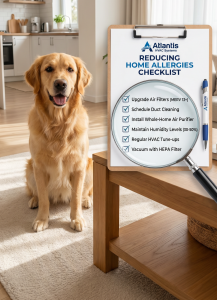 Your Monthly Filter Routine
The habit is simple: on the first of each month, pull out your current filter and hold it up to the light. If you can’t see light through it clearly, replace it immediately. Don’t wait for a calendar date. Signs to replace right away:
- Filter looks grey or brown instead of white
- Visible pet hair coating the surface
- Reduced airflow from vents
- Increased dust on furniture within days of cleaning
Keep two spare filters on hand so you’re never waiting on a store run.
Tackling Pet Odours with Your HVAC System
Surface cleaning removes visible dirt, but many pet odours come from microscopic particles and volatile organic compounds that remain suspended in the air or absorbed into soft materials. Your HVAC system can help manage these odours, but only if it’s running with proper filtration and adequate ventilation.
Run Your System Fan More Consistently
Instead of “auto” mode where the fan only runs during heating or cooling, switch to “circulate” or “fan on” for several hours per day. This moves more air through your filter and dilutes odour concentrations. Many modern thermostats include a circulate setting that runs the fan 15-20 minutes per hour automatically.
Improve Ventilation Where Practical
Running bathroom fans for 20 minutes after showers and kitchen fans during cooking removes humid, odour-carrying air before it spreads through your ductwork.
Targeted Air Quality Products
For homes with persistent odour issues despite regular cleaning and filter changes:
- Electronic air cleaners: Capture smaller particles than standard filters. Best for heavy shedders and allergy households.
- UV lights: Installed in ductwork to neutralize odour-causing bacteria and mold spores.
- Activated carbon filters: Target odour molecules specifically. These don’t capture dander and work best alongside a particle filter.
These solutions address the source of odours instead of covering them with sprays or plug-in fragrances that add chemicals to your indoor air.
Humidity, Pets, and Comfort
Humidity levels directly impact how your home smells, how comfortable it feels for both people and animals, and how effectively your HVAC system manages pet-related air quality issues.
High Humidity (Above 50%)
- Makes pet odours more noticeable and persistent
- Creates that damp feeling even when pets are dry
- Encourages dust mite populations
- Can contribute to mold growth in basement areas
Low Humidity (Below 30%)
- Irritates airways for both people and pets
- Causes dry, itchy skin and increased static electricity
- Makes pets shed more as their skin becomes uncomfortable
Target Range
30-50% relative humidity minimizes odour intensity, reduces allergen levels, and keeps everyone more comfortable year-round. Portable humidifiers and dehumidifiers work for single rooms but create inconsistent conditions across your home. Whole-home systems maintain consistent humidity automatically throughout the house.
Where Fur Hides: Ducts, Vents, and Returns
Return vents actively pull air and everything floating in it toward your furnace. Floor registers, especially near pet beds and favourite sleeping spots, become collection points for loose fur.
Common Pet Hair Hotspots
- Floor return grilles: Large return vents near the floor pull in more pet hair than any other location. Check the area right around the grille and inside the first few inches of the duct.
- Supply vents near pet areas: While supply vents blow air out, they still collect dust and fur on the fins and frame, especially near pet beds, crates, or favourite lounging spots.
- Around your furnace or air handler: The filter slot area and return air plenum often show visible fur buildup.
Simple Maintenance Habits That Help
Monthly: vacuum all visible vent covers with your vacuum’s brush attachment, paying particular attention to return vents in rooms where pets spend most time. Remove vent covers quarterly and vacuum the first foot of ductwork you can reach.
For pet areas: avoid placing pet beds directly in front of return vents, keep litter boxes several feet away from return air grilles, and launder washable pet bed covers weekly to reduce loose fur.
On Duct Cleaning
Duct cleaning can remove accumulated debris, but it won’t fix underlying design problems. Many pet homes benefit more from sealing duct leaks, adding or resizing return vents, and ensuring proper system balance than from routine duct cleaning alone. Fix those issues first.
A Maintenance Plan Built for Pet Owners
Pet households benefit from a more proactive, frequent maintenance approach than pet-free homes. Most of these tasks take just minutes and prevent expensive problems.
Monthly 5-Minute HVAC Check
Set a reminder for the first of each month:
- Filter inspection: Pull out the furnace filter. Replace immediately if you can’t see light through it or if pet hair covers the surface.
- Vent and grille cleaning: Vacuum visible pet hair from floor registers and return grilles. Focus on rooms where pets spend the most time.
- Visual equipment scan: Look for loose fur around the furnace or air handler area. Vacuum any visible buildup before it gets pulled into the system.
- Comfort note: Note any rooms that feel too hot, too cold, or stuffier than others. These patterns help identify problems early.
Professional Service Every 6-12 Months
Book regular HVAC maintenance and make sure your technician addresses pet-specific concerns. Your visit should include filter replacement and recommendations for your home, an inspection of ductwork for visible fur buildup, a check of the blower motor and electrical components for excess strain, and a discussion of any indoor air quality concerns.
If heavy dust settles on surfaces within 1-2 days of cleaning, family members experience worsening allergy or asthma symptoms at home, or visitors consistently comment on pet smells, request a comprehensive indoor air quality evaluation.
Frequently Asked Questions
How often should I change my furnace filter if I have two dogs?
Check monthly. Replace every 1-2 months on average, but trust what you see more than the calendar. If the filter looks dirty or clogged before two months, change it immediately. Homes with multiple pets, heavy shedding breeds, or family members with allergies often need monthly changes.
Can pet hair damage my furnace or air conditioner?
Yes, when filters clog and you don’t replace them promptly. Restricted airflow forces motors to work harder, increases heat buildup, and can lead to premature equipment failure. The damage is cumulative. Each month of running with a clogged filter shortens your system’s lifespan.
Will a better filter eliminate all pet odours?
No single solution eliminates all odours. Better filtration captures more dander and particles that carry smell, but complete odour control requires a combination: appropriate filtration, adequate ventilation, proper humidity levels, and regular cleaning of pets and their areas.
Do electronic air cleaners work better than regular filters for pet hair?
Electronic air cleaners excel at capturing fine dander and allergens but still require regular maintenance (monthly cleaning of collector plates). They work best in combination with standard filters for larger particles. For heavy shedders, a high-quality pleated filter changed monthly often provides better value.
Should I close vents in rooms my pets don’t use?
No. Closing vents disrupts system balance, can increase pressure in ductwork, and may cause comfort problems in other areas. Your HVAC system is designed to heat or cool your entire home. If certain rooms feel uncomfortable, the solution is balancing airflow or adjusting system settings, not closing vents.
How do I know if my ducts need cleaning because of pet hair?
Visible fur buildup around vents, rooms that stay dustier than others despite filter changes, and reduced airflow from specific vents can all indicate accumulated debris. Fix filtration and ductwork sealing first. These steps resolve the underlying problem most of the time and should come before duct cleaning.
Still dealing with pet hair, odours, or air quality issues?
If regular filter changes aren’t solving the problem, we can help. We’ll review your system, check ductwork and airflow, and walk you through practical options. No pressure, just clear answers.
Call Us: 905-845-4009
In This Article
Questions? We can help.
Atlantis HVAC Systems Inc.
905-845-4009 | Contact Us