
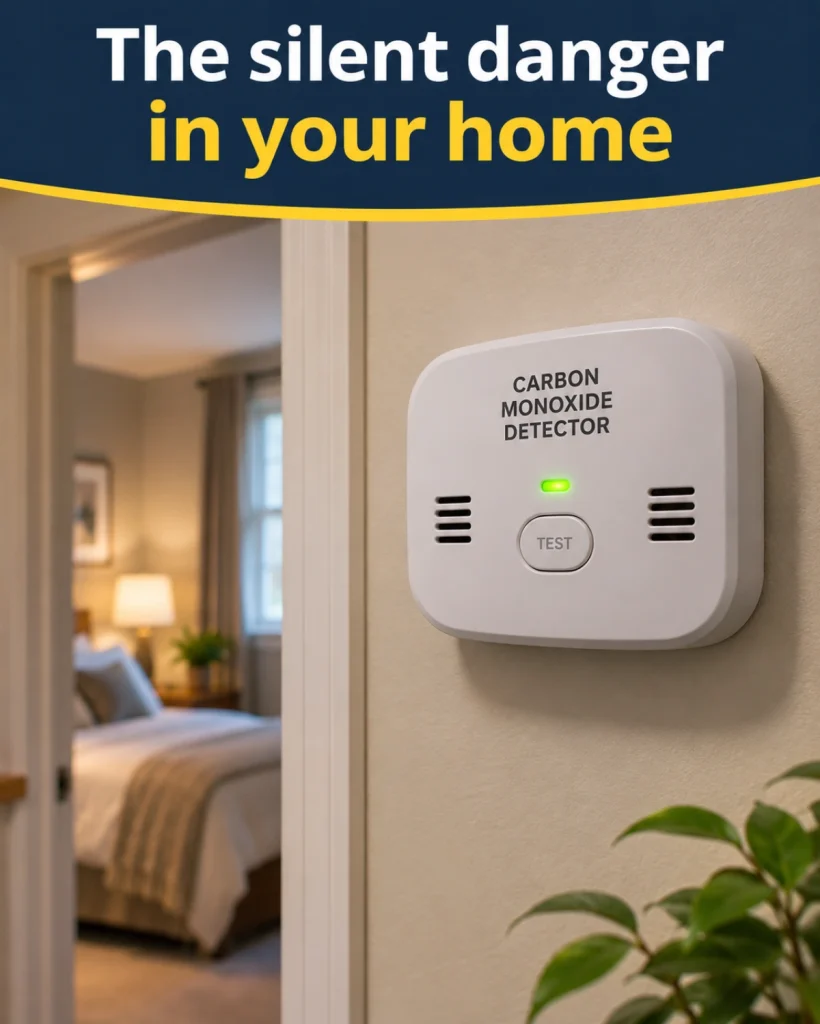
Carbon monoxide is a colourless, odourless, tasteless gas that any fuel-burning appliance can produce, and the only way to know it’s in your home is a working CO alarm. Put an alarm outside every sleeping area, test it, check its age, and have your furnace and other fuel-burning appliances inspected every year. The following steps will help improve your home’s carbon monoxide safety.
Let’s talk about something nobody wants to think about on a cold evening with the furnace humming away: carbon monoxide.
It’s not a fun topic, but it’s an important one, and a few small habits make a big difference. Think of this as a chat over the fence. Here’s what we’d tell you if we were standing in your driveway.
Quick Facts
- Carbon monoxide is colourless, odourless and tasteless. Only a working alarm can detect it.
- Any fuel-burning appliance can produce it, including furnaces, water heaters, stoves and fireplaces.
- In Ontario, about 65 per cent of carbon monoxide incidents happen in the home.
- Alarms belong next to every sleeping area and should be replaced after 10 years.
- Have every fuel-burning appliance inspected once a year.
What Carbon Monoxide Actually Is
Carbon monoxide, or CO, is a gas you can’t see, smell or taste. That’s why it’s often called the “silent killer.” Your senses simply can’t warn you. Only an alarm can.
It can come from any fuel-burning appliance: gas furnaces, water heaters, stoves, fireplaces and wood-burning equipment. A car running in an attached garage can put it into your home too.
In Ontario, about 65 per cent of carbon monoxide incidents happen in the home, the one place we all expect to be safest.
The good news is that CO is very preventable, and none of the steps below are complicated.
Step 1: Put Alarms in the Right Places
In Ontario, the law requires a working carbon monoxide alarm next to each sleeping area in any home that has a fuel-burning appliance, a fireplace or an attached garage.
A few practical tips:
- Put the alarm close to the bedrooms so you’ll actually hear it when you’re asleep.
- If your bedrooms are on more than one floor, you need more than one alarm.
- Fire Code changes have added alarm requirements for homes with fuel-burning appliances, fireplaces or attached garages, and some local fire services describe it as a CO alarm anywhere a smoke alarm is required. Check the current rules on the Ontario Fire Marshal’s carbon monoxide page to make sure your home is covered.
Step 2: Test Your Alarms and Check the Date
An alarm on the wall isn’t protection unless it works. Press the test button on every alarm in your home. It takes about ten seconds.
Then flip the alarm over and look at the date. Alarms wear out, and Ontario’s Fire Code calls for replacing them after 10 years. If yours is older than that, or you can’t find a date at all, swap it for a new one today.
Step 3: Have Your Appliances Inspected Every Year
An alarm tells you when there’s a problem. A yearly inspection helps you catch the problem before it starts.
Any appliance that burns fuel should be checked once a year by a qualified technician. For your furnace, that’s part of a proper seasonal tune-up, where we look at the heat exchanger, the burners, the venting and how everything is running.
Related Reading: Our HVAC maintenance guide walks through what a good visit includes.
Step 4: Give Your Appliances Room to Breathe
Fuel-burning appliances need a steady supply of fresh air to burn properly. When that supply is restricted, burning gets less efficient and more CO can be produced.
- Keep the area around your furnace and water heater clear. Storage boxes and laundry piles are the usual culprits.
- Don’t block or cover the vents and air intakes for your appliances.
- Never run a vehicle in an attached garage, even with the garage door open.
If you’re thinking about how your whole home breathes, our post on indoor air quality goes into more detail.
Step 5: Know the Signs and What to Do
Carbon monoxide poisoning can feel a lot like the flu at first. Common signs include headaches, dizziness, nausea and unusual tiredness. A big clue is when everyone in the house feels off, and the symptoms ease when you leave the building.
If your CO alarm sounds, treat it as real:
- Get everyone, including pets, outside into fresh air right away.
- Call 911 from outside.
- Don’t go back in until emergency crews say it’s safe.
Don’t open a window and wait to see what happens. Get out first.
Quick Answers
Can I smell carbon monoxide?
No. It has no colour, odour or taste. A working CO alarm is the only way to detect it.
How often should I replace my carbon monoxide alarm?
Ontario’s Fire Code calls for replacing CO alarms after 10 years. Check the date printed on the back of yours.
How often should my furnace be inspected?
Once a year. Annual inspection of every fuel-burning appliance is one of the most effective ways to prevent a CO problem.
Do I need a CO alarm if I have an attached garage but no gas appliances?
Yes. Ontario’s requirement applies to homes with a fuel-burning appliance, a fireplace or an attached garage, so a garage alone is enough.
What should I do if my CO alarm goes off?
Get everyone outside, call 911 from outside, and stay out until emergency crews tell you it’s safe.
Not Sure Your Furnace Is Safe?
If it’s been more than a year since your furnace was inspected, or you’re not sure how old your alarms are, we’re happy to help. Our team looks at this every day and will walk you through exactly what we check and why.
Sources: Government of Ontario, Carbon Monoxide Safety; Ontario Poison Centre, Ontario Safety Partners Unite in the Fight Against Carbon Monoxide; Office of the Fire Marshal, Carbon Monoxide Awareness Week.
In This Article
Interested in testing your home’s carbon monoxide safety? Contact us today.
Atlantis HVAC Systems Inc.
905-845-4009 | Contact Us